
TNREGINET Patta Chitta: Record Split and Where to Check
Use this page when TNREGINET and Patta Chitta get mixed together. The first answer is simple: TNREGINET does not replace the land-record side. This page is for separating the registration route from the land-record route before you open a specific service.
Stay here for boundary clarity, record-type split, and the right next route. This page does not replace Patta ownership checks, EC history review, or FMB sketch follow-up once the exact property question is already clear.
Best for registration, EC, document, and guideline-value checks.
Land-record terms connected with ownership, survey, and land details.
Careful property checking often needs both registration and land-record evidence.
Most users reach this page in the middle of one property problem. They already have a deed, survey number, EC doubt, or ownership mismatch in front of them and need to know which side to check first. Use TNREGINET guideline value, EC, and document services for the registration side. Use Patta and Chitta for the land-record side. This page is the split, not the final owner of those specific routes.
Use the right record first
- Open TNREGINET first when the question is about EC, registered documents, guideline value, or SRO-linked registration details.
- Open land records first when the question is about Patta, Chitta, survey subdivision, owner mapping, or land type.
- Put both sides together only when the property decision is serious enough to need a full check.
Why Users Search TNREGINET Patta Chitta
These words get typed together because one property doubt quickly turns into several smaller checks. A user may need to read the sale deed, check EC history, match the survey number, and confirm whether the owner details line up. That is why TNREGINET, Patta, and Chitta often appear in the same search even though they do not come from the same system.
That mixed search is understandable. The problem starts later, when unofficial pages make it sound as if one portal will settle everything in one shot. It will not. Each record answers a different part of the property story.
What people expect when they type Patta Chitta into TNREGINET
Most users come here because they want one clear answer, not a theory lesson. They want to know whether to check the registration side first or the land-record side first. TNREGINET can help with the registered side of the property, but it does not replace the land-record extract itself.
What the search is really trying to confirm
Underneath the broad phrase, the question is usually practical. Is this the right land parcel? Does the owner name match? Does the registered history support the claim being made? Are the survey and subdivision details pointing to the same property? That is why this search sits close to real buying, selling, inheritance, and correction work.
Why TNREGINET and Patta Chitta get mixed together
They get mixed together because both show up in the same property-checking workflow. A buyer may review EC through TNREGINET to see the registered trail, then switch to the TNREGINET Patta guide to deal with survey, owner, or land-type questions. The tasks are related. The systems are not identical.
That overlap is enough to create confusion in search results, especially when broad competitor pages flatten both sides into one “portal” story. It is better to separate them early and avoid wasting time in the wrong place.
Important distinction
TNREGINET is part of the property-checking flow, not the full replacement for Patta or Chitta records. It helps on one side of the job, while land records handle the other.
What users are usually trying to verify about a property
By the time someone searches this phrase, they are usually trying to lower risk around one real property. They want to know whether the land details, owner details, and registration trail are telling the same story before they spend money, sign papers, or move to office follow-up.
Users may be trying to verify
- whether the survey number matches the property being discussed
- whether the owner details look consistent across records
- whether EC history supports the claimed transaction trail
- whether the land record and registration document refer to the same property
- whether the property is rural, natham, urban, or survey-based
- whether a mismatch needs office-level clarification
That is why this keyword should be handled as a clarification page, not as a fake one-portal solution. TNREGINET helps with registration-side evidence. Patta and Chitta help with land-record-side evidence.
What TNREGINET Helps With in Property Verification
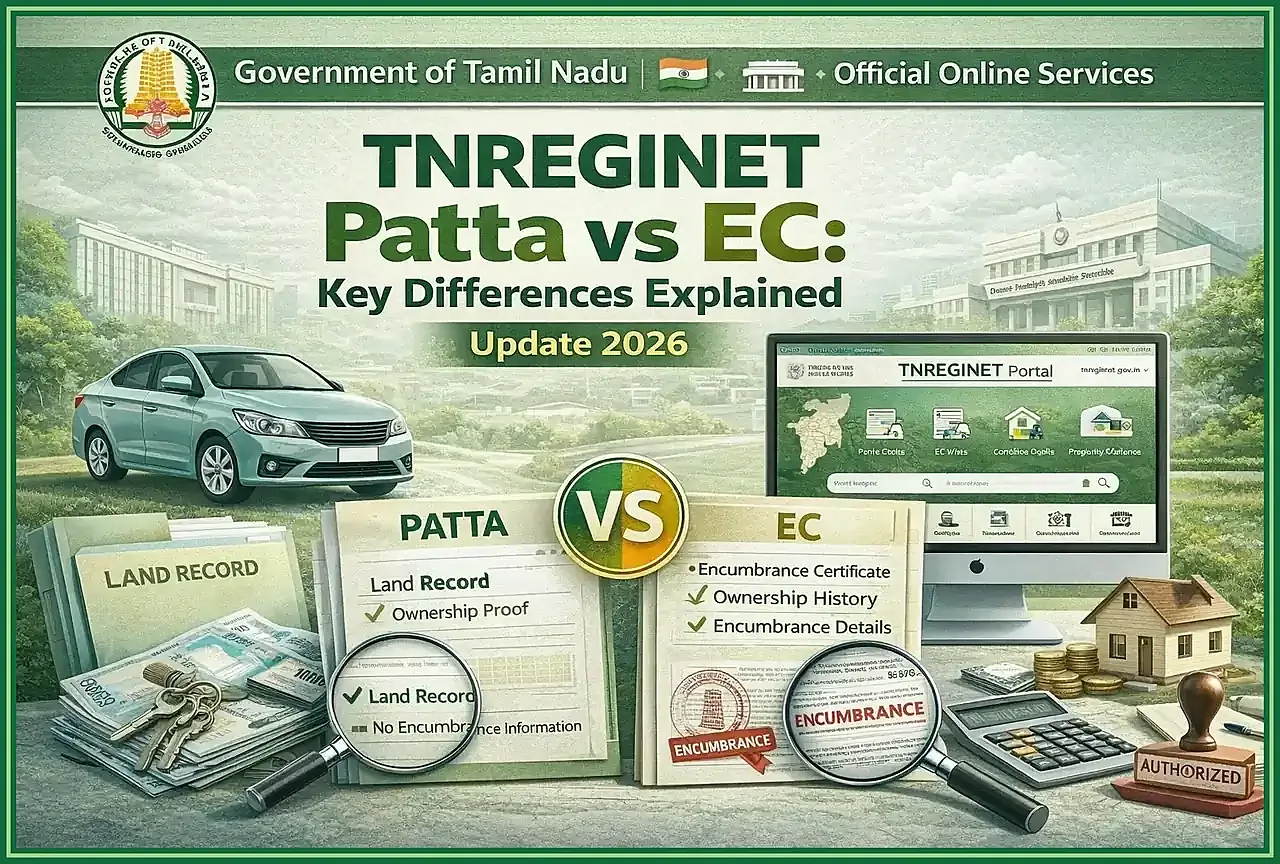
TNREGINET earns its place when the doubt is about the registered side of a property. That includes EC history, document follow-up, certified copies, guideline value, and office-level registration context. If the question begins with “what was registered, when, and through which office,” TNREGINET is the better starting point.
That still leaves one important limit. TNREGINET is showing the registration trail around the property. It is not the land record itself. That is why it helps, but it does not settle every Patta or Chitta doubt on its own.
Registration records
Useful for registered document activity, document numbers, and Sub-Registrar Office context.
EC checks
Helpful for reviewing registered transaction or encumbrance history for a selected period.
Guideline value
Useful for understanding registration-side value references and planning questions.
EC, registration, and document-based property checks
The strongest use of TNREGINET here is simple: check the registered trail before you trust the wider property story. EC can show the recorded activity for a selected period. Certified-copy follow-up can help when the document itself needs a closer look. Guideline value helps on the registration-value side, not the ownership side.
TNREGINET can support checks such as
- viewing EC-related information for registered transaction history
- checking document registration-related services
- using guideline value for registration planning
- looking for certified copy or document follow-up paths
- checking Sub-Registrar Office or jurisdiction details
- using document numbers, survey numbers, village, and SRO details during searches
These checks matter because they answer questions Patta and Chitta do not answer well. They can show whether a deed was registered, whether the document trail needs a second look, and whether the registration-side details match the claim being made about the property.
Where TNREGINET supports but does not fully replace land-record checks
Once the question shifts to Patta, Chitta, survey subdivision, land extent, land type, A-Register, TSLR, or FMB details, TNREGINET stops being the main source. Those details live on the land-record side. They are closer to the revenue record than to the registration portal.
This is the boundary many people miss. A registered document can still exist even when the land record needs correction or a closer look. In the same way, a land record can look clean while the registered-document trail still needs review. That is why both layers have to be read for what they actually prove.
Use TNREGINET for
EC, registration documents, certified copy, guideline value, SRO, and document-based checks.
Use land records for
Patta, Chitta, survey number, subdivision, land extent, A-Register, TSLR, and FMB checks.
Use TNREGINET when your question is about
- EC or registered transaction history
- registration documents and certified copies
- guideline value and registration planning
- Sub-Registrar Office jurisdiction
- document-based property verification
Use land-record services when your question is about
- Patta or Chitta details
- survey number and subdivision details
- land classification or land extent
- rural, natham, or urban land-record extracts
- A-Register, TSLR, or FMB-related checks
For a serious property decision, do not let one side speak for the other. If the TNREGINET result and the land-record result do not match, stop there and verify before moving ahead.
What Patta and Chitta Mean in Simple Terms
People use Patta and Chitta together because both sit on the land-record side of a property check. When someone wants to know whether the land details match the deed or the claim being made by a seller, these are the terms that usually come up first.
Patta is commonly read as the record linked to the land holding and the person tied to it. Chitta is tied more closely to land classification context. Online, the two get bundled together because users are not trying to study old terminology. They are trying to understand one piece of land without getting lost between portals.
Patta
Commonly connected with ownership or revenue-record details for a land parcel.
Chitta
Traditionally associated with land classification and related land-record details.
Property matching
Useful for comparing survey, owner, extent, and classification details with documents.
Why these land records matter for buyers and owners
These records matter because they help answer a plain question: does the land side match the paper side? If the survey number, subdivision, owner name, land extent, or classification does not line up, that is not something to brush aside.
Buyers use them to see whether the property being shown to them makes sense on the land-record side. Owners use them when a sale, inheritance matter, loan discussion, or correction issue is already in motion and they need to see whether the revenue-side details still hold up.
These records are especially useful for checking
- owner or pattadar-related details
- survey number and subdivision details
- land extent and land classification
- village or taluk-level land-record information
- differences between land records and registration documents
- whether a mismatch needs office-level correction or clarification
How they differ from registration records and EC history
Patta and Chitta do not tell the same story as registration records or EC history. Registration records are tied to deeds and other registered documents. EC shows the registered entries that appear for the period you search. Patta and Chitta sit closer to the land entry itself.
That difference is the reason this keyword keeps confusing people. One record can look fine while another record still raises questions. Reading them as if they are interchangeable is where mistakes start.
Think of the difference this way
- TNREGINET registration records show registered document activity
- EC history shows registered encumbrance or transaction entries for a searched period
- Patta and Chitta help users check land-record and survey-related details
- a complete property review may need all of these records together
One clean record is not enough on its own. A clear EC does not prove the land side is correct. A matching Patta does not replace document review or legal review when the stakes are high.
TNREGINET and Patta Chitta: Where the Connection Ends
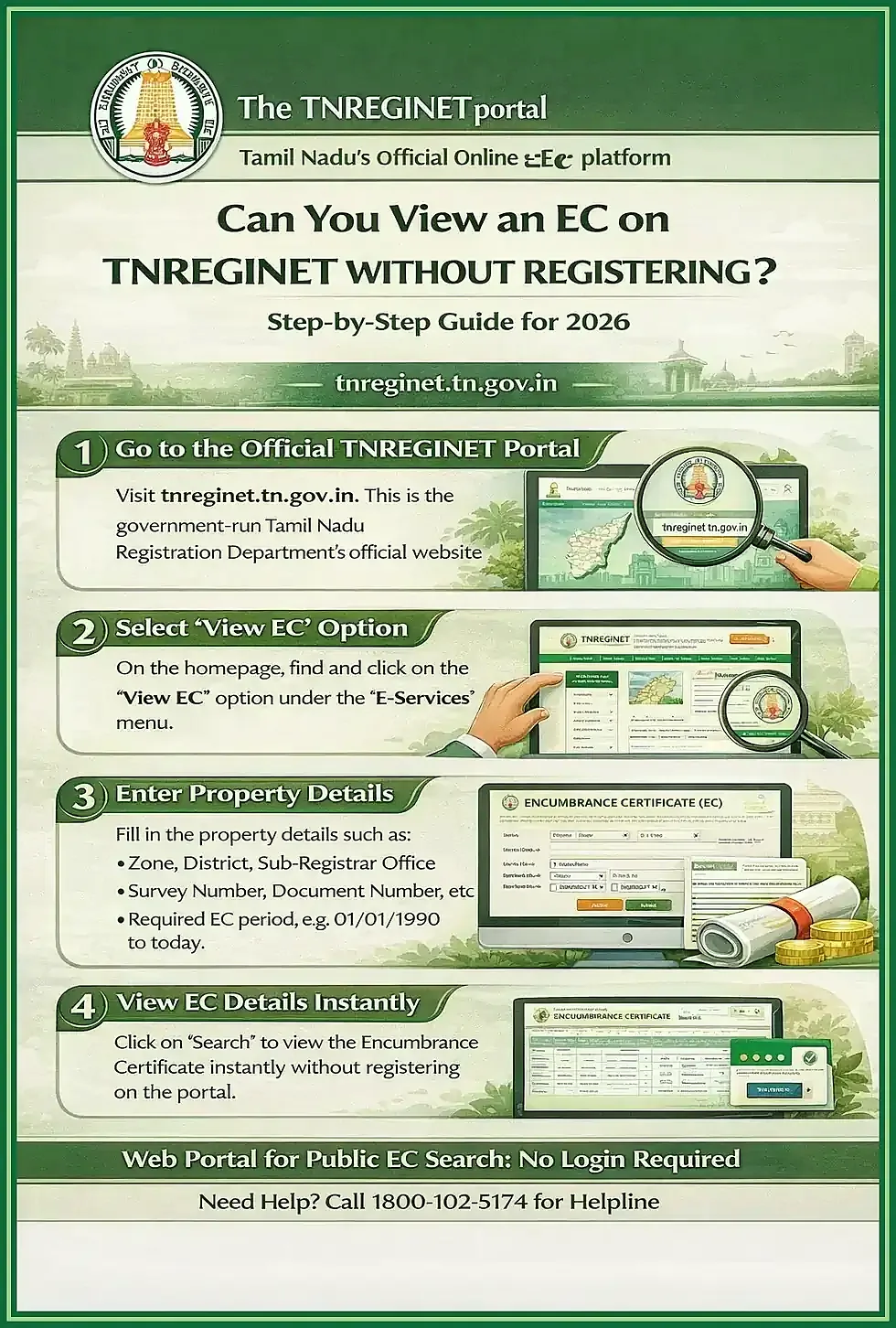
The overlap ends the moment you ask which system actually stores the answer you need. TNREGINET stores the registration-side answer. Patta and Chitta checks belong to the land-record side. They help with the same property decision, but they do not come from the same place and they do not prove the same thing.
This matters because people lose time when they keep pushing the wrong portal for the wrong question. If the doubt is about EC, registered document history, certified copy, guideline value, or SRO jurisdiction, TNREGINET is the better starting point. If the doubt is about survey details, land extent, land type, or revenue-side ownership, users need the land-record service instead.
Services users can complete or support through TNREGINET
TNREGINET is useful when the question is tied to what got registered, where it got registered, or which document needs another look. That includes EC, certified copy support, guideline value, and document-driven verification work.
Users can use TNREGINET for
- EC view and encumbrance-related checks
- document registration-related services
- certified copy or document follow-up paths
- guideline value lookup for registration planning
- Sub-Registrar Office and jurisdiction guidance
- registration-side document verification
Those services help because they give the registration-side context around the same property. They still do not replace the land-record extract.
When users need to check other Tamil Nadu land-record systems separately
Users need the separate land-record system when the question is about the land entry itself: survey number, subdivision, land extent, classification, or the record tied to that parcel. That is a different job from checking whether a deed was registered or whether an EC shows entries for a chosen period.
Check land-record systems separately when you need
- Patta or Chitta details
- A-Register or TSLR information
- FMB or field-measurement-related details
- survey number and subdivision confirmation
- land extent or classification details
- revenue-side ownership or mutation-related clarification
If you are checking a property for purchase or correction work, keep the TNREGINET result and the land-record result side by side. Read the names, survey details, village, and document references together instead of trusting either record in isolation.
Why mixing these systems causes confusion
Confusion starts when users treat both systems as if one result should automatically confirm the other. It does not work that way. TNREGINET answers registration-side questions. Patta and Chitta answer land-record-side questions.
A clean EC does not prove the survey or land classification is correct. A clean land record does not prove the registered-document trail is clean. Once that is understood, the route split becomes much easier to handle.
Practical rule
Use TNREGINET to read the registered trail. Use land records to read the land trail. If those two trails do not support each other, stop and verify before taking the next property step.
How to Use TNREGINET Together With Patta and Chitta Verification
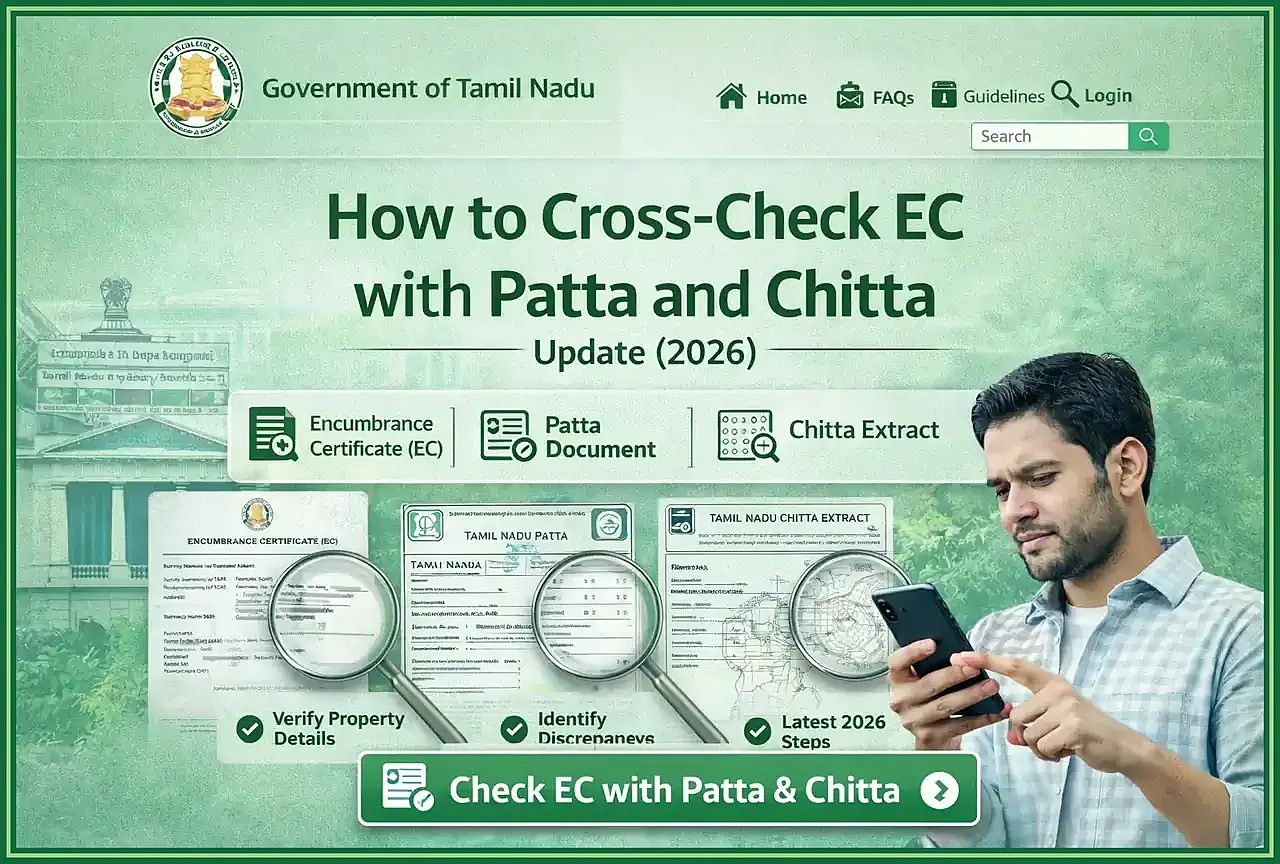
Do not try to prove everything with one screenshot or one portal result. Use TNREGINET for the registered side and use Patta or Chitta records for the land side. When both point to the same property details, the overall check becomes much stronger.
Start with whatever verified detail you already have: sale deed, document number, survey number, village, owner name, or SRO detail. Then compare one field at a time instead of trying to read the whole problem at once.
Checking EC, registration details, and supporting property documents
Use TNREGINET first when the missing piece is on the registration side. EC view can help you read the registered history for a chosen period. Certified-copy follow-up helps when the actual document needs a closer look. That is the part TNREGINET handles well.
Useful TNREGINET-side checks include
- EC view for registered transaction history
- document number and registration year checks
- certified copy or document follow-up paths
- Sub-Registrar Office and jurisdiction details
- guideline value when planning registration costs
- village, survey number, and SRO details used in document searches
After that, move to the land-record side and compare the land details properly. Look at the survey number, subdivision, owner details, land extent, land type, village, and taluk details where available.
Matching survey and ownership details carefully
The most important part is not opening the portal. It is matching the details once the records are open. A small mismatch in survey number, subdivision, spelling, village name, or owner name can change the meaning of the result completely.
Survey details
Check survey number, subdivision number, village, taluk, and district together.
Ownership details
Compare owner or pattadar names with deeds, EC entries, and land-record extracts.
Document details
Review document number, registration year, SRO, and property description.
Compare these details carefully
- survey number and subdivision number
- owner or pattadar name
- village, taluk, and district
- land extent and classification
- document number and registration year
- SRO and registration village
- property boundaries or descriptions in older documents
Handle small differences carefully
If one record uses an older village name or a slightly different spelling, do not dismiss it too quickly. Older deeds and revenue records can use older wording. But if the core details do not line up, do not rely on the record until the mismatch is explained.
Common TNREGINET Patta Chitta Confusion and Fixes
The most common mistake is expecting one portal to answer every property-record question. TNREGINET can help with EC and registered documents. Patta and Chitta checks help with land-record details. A mismatch does not always mean something dishonest happened, but it does mean the user should stop and verify.
The easiest fix is to name the exact doubt before opening anything. If the doubt is about registered transaction history, use TNREGINET. If the doubt is about ownership on the land side, land type, or survey details, use the land-record system.
Wrong portal expectations and mismatched service searches
Wrong portal expectations begin when someone types tnreginet patta chitta and assumes TNREGINET should directly show every Patta or Chitta record. That expectation is what sends people in circles.
Common confusion points include
- searching TNREGINET for Patta or Chitta extracts
- treating EC as proof that land-record details are correct
- treating Patta as proof that registered document history is clear
- using a survey number from one record without checking subdivision details
- assuming the same owner name must appear the same way in every record
- ignoring SRO, village, taluk, or revenue-office differences
Fix this by separating the search
- use TNREGINET for EC, registered document, certified copy, guideline value, and SRO-related checks
- use Tamil Nadu land-record services for Patta, Chitta, A-Register, TSLR, FMB, survey, and land classification checks
- compare the results before making a property decision
What users should do before moving to support or legal help
Before moving to support or legal help, gather the facts in one place. That makes office follow-up faster and gives the next person a clear view of where the mismatch starts.
Keep these details ready
- sale deed or parent document details
- document number and registration year
- district, SRO, village, and registration village
- survey number and subdivision number
- Patta or Chitta details found in the land-record system
- EC search period and result details
- screenshots or notes of any mismatch
Move to support or legal help when the owner name, survey number, subdivision, land extent, or document history does not line up and the mismatch stays unresolved after a careful record comparison. For a purchase, loan, inheritance matter, or dispute, online results should not be the last word.
TNREGINET Patta Chitta FAQ
Short answers to the most common search-intent questions
No. TNREGINET is useful for EC, registered documents, certified copy, guideline value, and SRO-related checks. Patta and Chitta belong to the land-record side and should be checked through the Tamil Nadu land-record system.
Because the terms overlap during real property checks. The connection is real, but the service path is different. Good content should explain that overlap without pretending TNREGINET is the full land-record system.
EC view is usually the first useful TNREGINET check because it helps users read the registered history for a selected period. Certified copy, document details, guideline value, and SRO checks can help after that if the case needs more review.
Choose the Right Record Before You Go Further
Use TNREGINET for registration-side proof and land records for revenue-side proof
Use TNREGINET when the doubt is about registered documents, EC history, certified copies, guideline value, document numbers, or Sub-Registrar Office jurisdiction. Use Tamil Nadu land-record services when the doubt is about Patta, Chitta, survey number, subdivision, land extent, land classification, or revenue-side ownership details.
Choose the next step by what you need to confirm
- use TNREGINET EC view to check registered transaction history
- use TNREGINET certified copy or document services for document-level follow-up
- use guideline value when planning registration-side costs
- use land-record services for Patta, Chitta, A-Register, TSLR, FMB, survey, and classification details
- compare both sides before buying, selling, registering, or taking a loan
- get office-level or professional help if the records do not match
Most people using this search are trying to sort out one confusing property situation, not learn portal theory. Read the registration side through TNREGINET, read the land side through Patta and Chitta records, and do not move forward on an important decision until both sides make sense together.